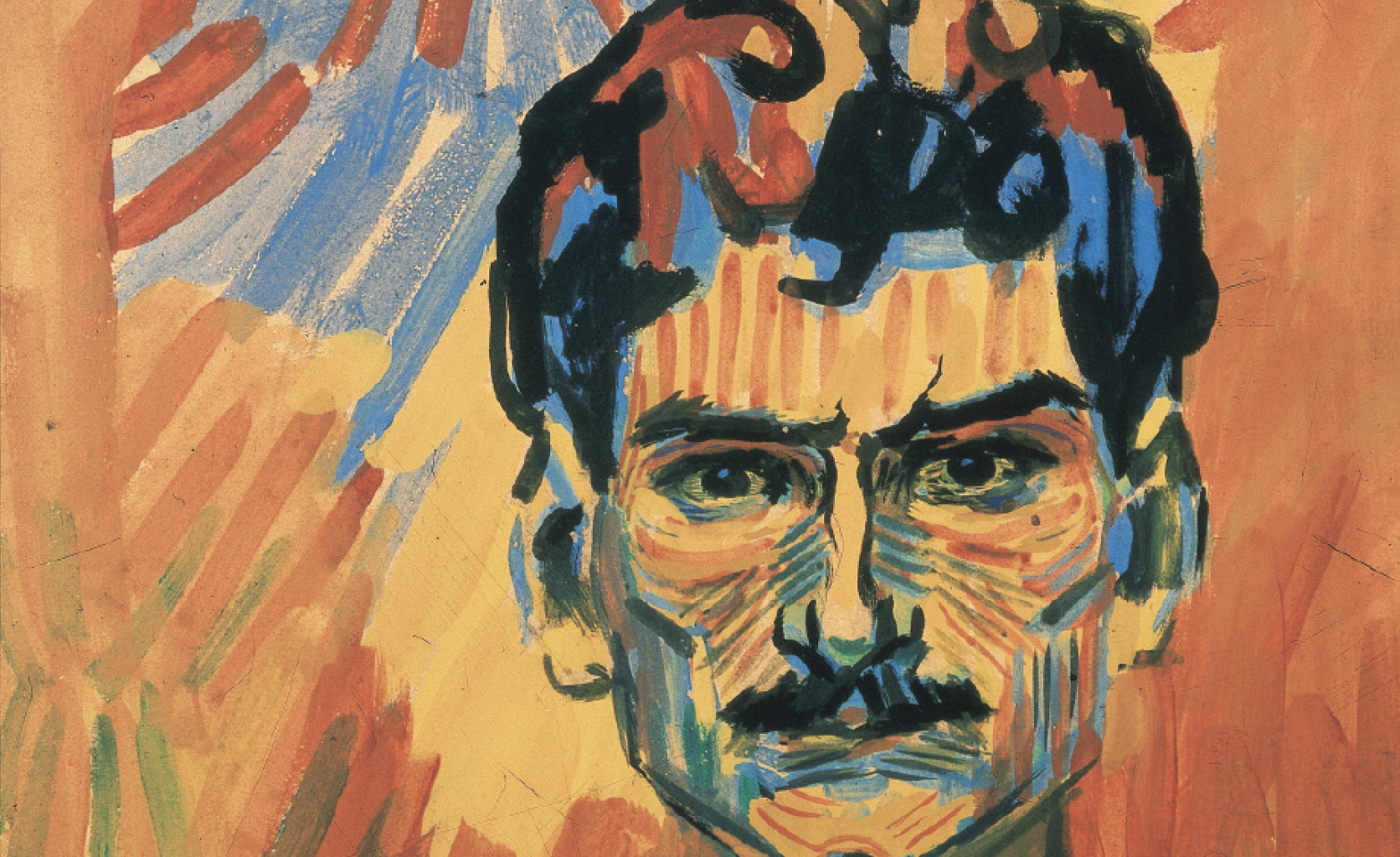
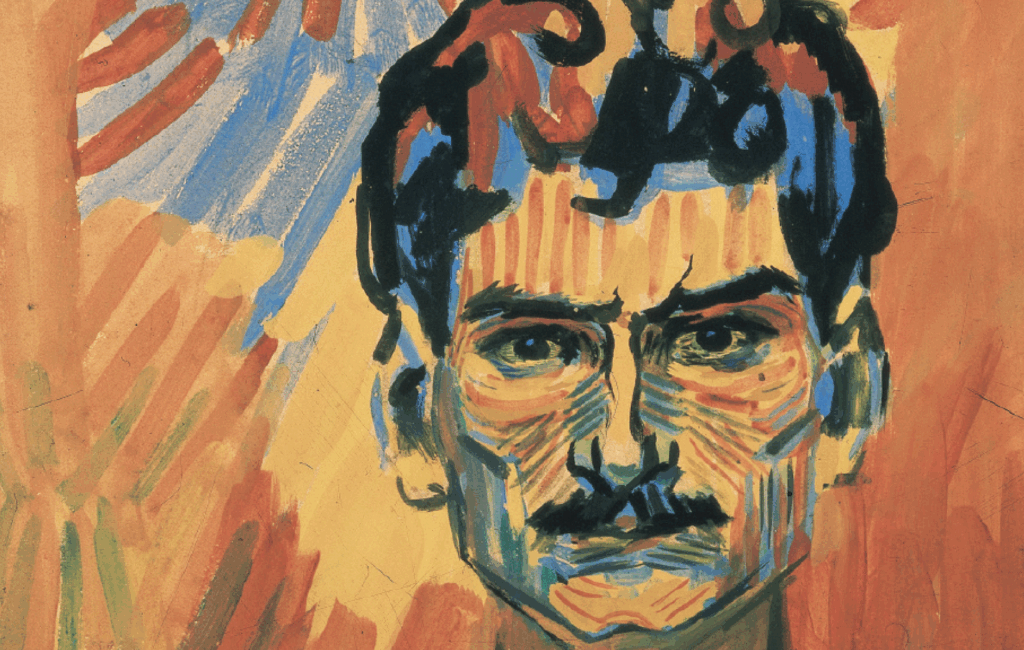
Martiros Saryan, Self-portrait 1909

Martiros Saryan, Self-portrait 1909

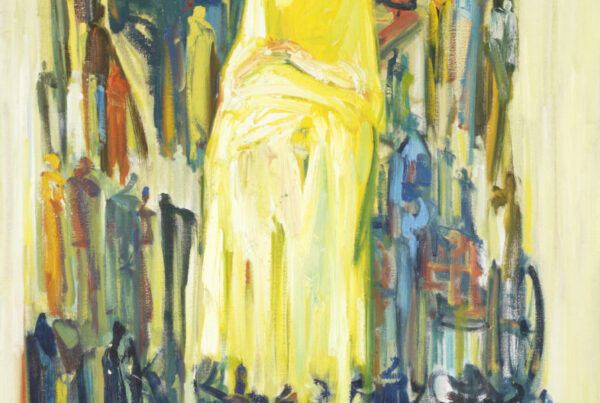
Few painters have rewritten a country’s visual DNA as radically as Martiros Saryan (1880-1972). In the decade before World War I he abandoned Impressionist greys for blazing, near-flat fields of colour that looked more like illuminated manuscripts than plein-air studies. Those chromatic experiments—later codified on everything from Soviet postage stamps to twenty-first-century tourism billboards—proved that a palette can serve as a nation-building toolkit.

Born in Nakhichevan-on-Don and trained at the Moscow School of Painting, Saryan devoured Puvis de Chavannes, Gauguin and the “Blue Rose” Symbolists, yet kept one eye on Armenian carpet dyes and medieval miniatures. By 1905 he had switched from oil to tempera, a medium that “electrified the colours in his palette,” preparing the ground for an indigenous Fauvism years before he encountered Matisse.

The breakthrough came with Pomegranate Tree (1907) and By the Sea – Sphinx (1908). In both, outlines are pared to essentials while reds, cobalt blues and yellows clash like enamel in a khachkar. Critics noted the absence of atmospheric depth, yet that very flatness—echoing carpet design—let Saryan treat landscape as a portable icon: a nation could be rolled up, shipped abroad, and unfurled on any salon wall.

Between 1910 and 1913 the artist roamed Turkey, Egypt and Iran, refining what he called his “oriental cycle.” Constantinople Dogs (1910) wilts beneath a lapis sky while Date Palm (1911) stages camel, earth and canopy in three stacked colour blocks. Space rises, miniature-style, “from the bottom to the top,” refusing European perspective and thus re-anchoring vision in the East.

Genocide and exile scattered compatriots in 1915, but Saryan decided to do the opposite: he repatriated. Settling permanently in Yerevan in 1921, he began cycling through motifs of Mount Aragats and Mount Ararat, sculpting form “by eliminating details in a search for a generalising concept.” Sunlit Landscape (1924) consolidates hill, sky and orchard into interlocking colour plates, a pictorial grammar flexible enough to absorb both trauma and hope.

The new Soviet republic embraced him as proof that “national in form, socialist in content” could be more than a slogan. Party cadres praised his portraits of workers and intellectuals, yet what truly served the ideological project was his chromatic shorthand for Armenianness: apricot orange + indigo shadow = homeland. Under the policy of korenizatsiia (nativisation) such stylistic codes became state assets.

From the 1940s until his death, Saryan refined the formula into monumental canvases like Armenia (1964), where Ararat floats above a patchwork plain in colours so intense they seem back-lit. Here the mountain is less geology than emblem; hue supersedes line, suggesting that identity resides in spectral vibration rather than cartographic borders.

That spectral logic outlived him. Minas Avetisyan in the 1960s–70s, and countless poster artists after independence, recycled “Saryan orange” to signal continuity while shifting subject matter. Even today, a quick scan of Yerevan murals reveals his chromatic DNA flickering beneath street-art aerosol.

For AMCA, Saryan offers a template for thinking about art as soft infrastructure. His landscapes were never mere scenery; they were blueprints for psychological reconstruction after genocide, tools for Soviet nation-craft, and now—paradoxically—icons of a post-Soviet brand. Mapping that continuum helps us ask how colour, memory and statehood continue to co-author each other in contemporary Armenian practice.

We invite readers to explore our upcoming digital sliders that compare Saryan’s tempera studies with later oil panoramas, and to contribute family photographs or posters that show where his palette has migrated next. The chromatic nation he envisioned is still unfurling—stroke by stroke—in living rooms, studios and city streets worldwide. Join the conversation and add your own colours to the map.
Leave a Reply

Alfredo Cramerotti is Director of the Media Majlis Museum at Northwestern University in Qatar. A curator, writer, and institutional leader with over two decades of international practice, his work spans contemporary art, documentary image culture, and the ethics of digital systems in cultural institutions. He has contributed to major biennials, research publications, and interdisciplinary programs across Europe, Asia, North America, the Gulf region, and beyond.

Dr. Pedro Lapa is a professor at School of Arts and Humanities at the University of Lisbon. He served as artistic director of the Berardo Collection Museum from 2011 to 2017 and as director of the National Museum of Contemporary Art from 1998 to 2009. He was also a curator at the Ellipse Foundation. He holds a Ph.D. in Art History from the University of Lisbon. He is the author of numerous publications on modern and contemporary art and has received awards for his essays in Portugal and France. He has also curated many exhibitions around the world.

Tina Lorenz came of age in the Chaos Computer Club but went on to study theater studies and American literary history in Vienna and Munich. They were a lecturer for theater history at the Academy for Performing Arts Bavaria, later dramaturge at the Landestheater Oberpfalz and finally consultant for digital communication at the Staatstheater Nürnberg, before founding and leading the Digital Theatre department at the State Theatre of Augsburg from 2020 to 2023.
Tina Lorenz is a founding member of the hackspaces metalab Vienna and Binary Kitchen Regensburg; since January 2024, they head the department of artistic research and development »Hertzlab« at ZKM | Karlsruhe.

Hulé Kechichian is Head of Special Projects at TUMO and General Director of the Armenian Cultural Heritage Institute. Founded by TUMO, the Institute focuses on the digital documentation and accessibility of Armenian cultural heritage through research, innovation, and new technologies.

Dr. Narek Tovmasyan, PhD, PMP® joined Swedish Arts Grants Committee in September 2025 as a National COnsultant for the ArtNExus Program in Armenia. He has spent over two decades in senior leadership roles within international organizations, leading multi million-dollar initiatives across fifteen countries. His work spans the arts, education, governance, and civil society, with a geographical reach extending from the Western Balkans and Eastern Europe to the South Caucasus and Central Asia.

Marek Claassen
Co-Founder, ArtFacts, Berlin
Virtual panel participant

Tereza Davtyan is an art critic and independent curator based in Yerevan, Armenia. She graduated from the History Faculty, Department of Arts, at Yerevan State University (YSU) and completed studies in Art Criticism and Curatorial Studies at the ICA Yerevan School. In 2020, she founded :DDD Kunst House project, an independent curatorial platform operating both virtually and physically, which brings together local and international artists. It provides a flexible space for artists and curators to connect, experiment, and collaborate outside of institutional frameworks. Since 2024, she has co founded In The Mountains Festival (Berlin) in collaboration with Untitled Tbilisi and SKLAD focusing on regional artistic exchange and cross border dialogue. In 2024, she is also launching the Sleepover Artist Residency, located near the Matenadaran in Yerevan, which offers artists the opportunity to work at their own pace within a non hierarchical, time-flexible environment.

Karine Kochar is Director of the Ervand Kochar Museum in Yerevan, where she has led the institution since 2015. With a background in architecture and museum studies, she has been actively involved in developing exhibitions, educational programmes, and publications dedicated to the life and work of Ervand Kochar. Her work focuses on museum development, cultural programming, and the promotion of modern Armenian art within both local and international contexts.

Lali Pertenava An art critic and curator based in Tbilisi, Georgia, whose work focuses on socially engaged art and public space in post‑socialist contexts. She is a doctoral candidate in history at the University of Zurich and founder of the Art Critics Association of Georgia and the Public Art Platform. Through Public Art Platform she has organised collaborative initiatives including Community Radio Tbilisi and Performance Day. She has contributed to local and international art publications, including Artforum and ArtAsiaPacific. Lali co‑curated the Armenian–Georgian group exhibition Common Breathturn / Gemeinsame Atemwende at the Giotto Museum, Yerevan (Oct–Nov 2025). She currently teaches Introduction to Contemporary Art History at the Georgian Institute of Public Affairs, Tbilisi.

Nata Sokolovskia is a digital engagement and marketing specialist with experience in social media, audience development, photography and art direction. Her work connects art, culture and communities through visual storytelling and accessible digital communication. She contributes to the visibility and public reach of cultural projects, helping them engage both local and international audiences.

Irina Igitkhanyan is a cultural producer and project manager whose experience spans exhibitions, education and international collaboration. Her work is grounded in intercultural exchange and the development of collaborative artistic projects. She also leads Delta Culture Armenia, an association supporting interdisciplinary initiatives in the arts. She contributes to AMCA’s project delivery and educational and cultural activities.

Joel Bresler is the publisher of SephardicMusic.org, a leading resource for information about Sephardic music. For five decades, he has collected, digitised and documented Sephardic recordings, collaborating with educational institutions worldwide. He is also the immediate past president of the Osher Map Library Foundation at the University of Southern Maine. The Osher Map Library was an early adopter of digitisation and web technologies and participates in cross-institutional initiatives including ARGO

Eva Khachatryan is an independent curator and Vice-President of AICA Armenia. Since 2009, she has led the suburb.am platform, focusing on residency programs and contemporary art initiatives. In 2025–2026, she serves as Team Lead & Key Expert for Culture at Goethe-Institut Armenia.

Her curatorial practice focuses on socio-political issues, collective practices, and new media in contemporary art. She has curated and collaborated on numerous international exhibitions and projects in Armenia and abroad, including in Basel, Karlsruhe, Düsseldorf, and Almaty. In 2025, together with Tereza Davtyan, she co-curated Art Forum Yerevan, supported by the EU Delegation to Armenia and implemented by Goethe-Institut Armenia with EUNIC Armenia and HayArt Centre.

Pau Aleikum Garcia is co-founder and director of Domestic Data Streamers, a Barcelona-based studio working across data, design and participatory art. The studio transforms complex information into physical, digital and interactive experiences and has presented projects in more than forty-five countries. His expertise contributes to AMCA’s thinking around digital storytelling, audience participation and the development of accessible cultural experiences.

Dr Marina Medzmariashvili is a senior researcher at the George Chubinashvili National Research Centre for Georgian Art History and Heritage. She specialises in twentieth-century art in Georgia and the cross-cultural development of modernism in the Caucasus. Her research includes extensive work on Armenian artists active in Tbilisi and the artistic relationships connecting Armenian and Georgian cultural histories.

Nazareth Karoyan is an art critic, curator and a leading figure in Armenia’s contemporary art field. He is the founder and director of the Institute for Contemporary Art in Yerevan and has initiated galleries, publications and educational programmes supporting contemporary artistic practice. His work addresses curatorial education, institutional development and the social and political dimensions of art.

Dr Iain Robertson is Professor of Art and Cultural Management at Hongik University in Seoul and former Head of Art Business Studies at Sotheby’s Institute of Art. A specialist in art markets, cultural management and emerging art economies, he has written extensively on art history, value and the global art market. He leads AMCA’s research direction and contributes to its publications and core intellectual programme.

Stephen McCoubrey is a London-based independent curator and art consultant. He worked for more than seventeen years as a curator with the UBS Art Collection, contributing across its international locations and art programmes. He now advises private and corporate collectors and works on curatorial and cultural projects internationally. At AMCA, he contributes to project development, curatorial thinking and the identification of international opportunities.

Zara Ouzounian-Halpin is a cultural producer and programme director specialising in international art initiatives that create opportunities for artists and encourage cultural dialogue. She co-founded the Armenian Art Fair and has developed and delivered art fairs, exhibitions, publications, research initiatives and international cultural partnerships. As Programme Director of AMCA, she leads its overall vision, programme development, partnerships and delivery.

The presentation explores contemporary approaches to the digital documentation and accessibility of Armenian cultural heritage through the work of the Armenian Cultural Heritage Institute. It will address how heritage preservation, digital technologies, and 3D scanning initiatives can support contemporary artistic creation, research, and new forms of cultural engagement, including projects such as the Armenian Pavilion at the Venice Biennale 2025.

DDD Kunst House is an independent virtual and physical shared space that aims to provide a platform for local and international artists and curators to connect and communicate in a pure and free environment. The concept was founded in 2020 by curator Tereza Davtyan during the lockdown in Yerevan, as a response to the need for an online space where artists and curators could work together outside the limitations of traditional art institutions, foundations, museums, and galleries. :DDD Kunst House initiates from messenger chats to studio visits while sharing an open space for proper communication and collaboration. It selects the most relevant projects and may showcase them spontaneously, without focusing on a specific target audience, as it is sure that the audience will, one way or another, find their way to :DDD Kunst House. Founded in 2020 during the global COVID-19 pandemic, :DDD Kunst House is an independent, curator-led platform dedicated to fostering artistic exchange, care, and experimentation across borders. Initially operating entirely online, the initiative built a strong and diverse community through digital exhibitions, public talks, and collaborative projects. In 2022, the platform transitioned into a physical location within the former Scientific Research Institute of Spa Treatment and Physical Medicine in Yerevan, a unique and unconventional space that continues to serve as a site for exhibitions, residencies, performances, workshops, and informal public gatherings. At the core of its programming is the Sleepover Artist Residency, a distinctive, process-oriented residency model that offers artists time and space to rest, reflect, and create without the pressure of fixed outcomes. Since its launch (2024–2025), the residency has welcomed over 20 international artists from countries including Germany, France, Taiwan, Switzerland, Croatia, the United States, the Netherlands, Luxembourg, Georgia, Argentina/Chile, Italy, Ukraine, and the United Kingdom. This ongoing international engagement has significantly enriched the local cultural context and fostered meaningful, long-term connections between artists, curators, and researchers. :DDD Kunst House continues to operate as a flexible and responsive platform that supports contemporary artistic practices while maintaining a strong commitment to inclusivity, hospitality, and critical dialogue. website: www.dddkunsthouse.com IG: @ddd_kunsthouse

This presentation introduces the mission and current activities of the Ervand Kochar Museum, situating its work within the broader context of preserving and promoting modern Armenian art. It reflects on the legacy of Ervand Kochar, highlighting key aspects of his artistic contribution, while also outlining the museum’s recent achievements and its ongoing efforts to reposition Kochar within an international art historical framework.

This presentation examines the question of national identity among artists of the Tbilisi school of painting of both Georgian and Armenian origin. It focuses on professional artists Mose Toidze and Grigol Sharbabchyan, as well as self-taught painters Niko Pirosmani and Karapet Grigoryants.

A comparative analysis of their works reveals, on the one hand, shared themes and motifs, and on the other, differences in aesthetic and artistic perception. These differences, among artists living within the same geographical and social environment, demonstrate the resilience of long-standing national traditions in both cultures.

Abstract: Charles Sirató’s Dimensionist Manifesto (1936) created a network linking the international avant-garde, including Ervand Kotchar and António Pedro. Grounded in the theory of relativity and an interpretation of the fourth dimension, it extended this idea across literature, painting, sculpture, and their transgressions. These arts were expanded upon by adding a new dimension to the traditional ones. While Kotchar’s “painting in space” and Pedro’s dimensional poems viewed dimensional increase based on concepts of simultaneity and duration, Sirató emphasized a scientifically informed, material objectification as the basis for new perception. Together, these perspectives define a key transformation of the art object in the avant-garde in the 1930s.


Leon (Serge) Tutundjian: A Moment in Time: The Paris avant garde in transition amid a multiplicity of theories and practices.

Between 1925 and 1930, Paris functioned as a cauldron of ideas and experimental practices across film, poetry, sculpture, painting, and philosophy. At the centre of these developments were urgent questions of space and metaphysics-above all, the relationship between objects and the role of the viewer in the realisation of a work of art.

Within this field, Leon (Serge) Tutundjian emerges as a key figure. His work destabilises form, collapsing the boundary between object and perception and requiring the viewer’s active participation. In doing so, he anticipates the logic of Tachism-not as a style, but as a mode of thought in which the artwork is realised through perception.

Alongside Kochar and Kakabadze, Tutundjian exhibited with the Parisian avant- garde, contributing to a shift from form to experience. The Wall Street Crash of 1929 curtailed this moment of experimentation, forcing artists and markets into retreat. Tutundjian left Parris soon after, his trajectory abruptly interrupted.

This brief period-following the cultural intensity of Weimar Berlin-proved decisive in shaping modernism. Though now largely forgotten, Tutundjian was not peripheral, but integral to this redefinition of the artwork as a site of unstable meaning and viewer realisation.

This presentation explores how the unique institutional model of the ZKM | Center for Art and Media, Karlsruhe supports media art across its entire lifecycle: From ideation and production through exhibition to preservation and restoration. Central to this approach is empowering artists through the support infrastructure and expertise of its people, integrating cutting-edge tools into an ecosystem that bridges artistic production, maintenance, and long-term conservation of
media art works.

What happens when a museum cannot honestly say what a work is, who made it, or whether what you are seeing matches what was first shown? This talk argues that digital instability is not a technical problem awaiting a solution — it is the underlying condition of cultural work today. Moving through three interlocking registers — technical, cognitive, and authorial — it proposes framing as care as a curatorial practice adequate to the present: one that renders uncertainty legible rather than resolving it, and that holds institutions accountable for the systems they host, commission, and call art.

This presentation explores how and why the ArtNexus project integrates international expertise with local governance to foster a resilient and democratic cultural sector in Armenia. By examining our multi-stakeholder approach to policy development and institutional support, we highlight how collaborative program models can bridge the gap between global standards and local artistic needs while maintaining respect for cultural differences.

This theme looks at cross-border initiatives, artist collectives, and collaborative projects that connect Georgian and Armenian artists and cultural practitioners. In reaction to common histories of empire, conflict, migration, and underfunded cultural infrastructures, it emphasises the practical, ethical, and political aspects of cooperation. It explores how such partnerships negotiate national narratives and conflict legacies while addressing networked practices, such as co-productions, artist-run spaces, residencies, exhibitions and digital platforms.