Introduction

Berlin. The following research reveals basic art market data for the South Caucasus region. Armenia, Azerbaijan, and Georgia are each represented by the career developments of three selected top artists. The analysis describes the dynamics of the artists’ ranking over the years. The ranking is calculated according to the number and quality of shows in relation to all other artists listed on Artfacts.Net. The highest-ranking position is one, and the lowest is 206256.

In the article Armenia! The New Modern Art Hub of the Caucasus?, published in Asia Times on February 3rd, 2019, the author Vigen Galstyan classifies Armenian post-Soviet artists such as: Karen Ohanyan, Grigor Khachatryan, and David Kochunts as ‘treasure troves for adventurous collectors’. None of those artists has a strong profile within the Artfacts.Net platform.

‘ There is a certain tension between public critics’ reviews on contemporary Caucasian art and facts as presented by quotas within the exhibitions’ history at Artfacts.Net. The conclusion drawn from these examples is that émigré Caucasian artists, whose work was displayed in Western institutions, managed to build more international profiles than those who remained at home. ‘

Results

Armenia

The first top Armenian artist, Armen Eloyan (b.1966, Yerevan), is placed at number 6260 in the global ranking. He works in the medium of painting. He is known for his large-scale, irreverent paintings of anthropomorphic animals and figures, in which the artist depicts absurd narratives in his darkly existential manner. He participated in 69 exhibitions, of which 18 were solo shows. He was mostly exhibited in Switzerland, Belgium, and Germany. Eloyan is represented by Timothy Taylor Gallery, London (no. 12 in the United Kingdom), Upstream Gallery, Amsterdam (no. 9 in the Netherlands) and Tim van Laere Gallery, Antwerp (no.16 in Belgium). Exhibition history indicates that Armen Eloyan’s career is almost entirely based in Western Europe, with the exception of a few shows in the United States.

The second top Armenian-Canadian artist Yousuf Karsh (b.1908, Mardin, Ottoman Empire -modern-day Turkey – d. 2002 in Boston) is placed at number 9073 in the global ranking. Karsh worked in photography, representing portraits of famous individuals. He was exhibited 102 times, almost half of them (48) in solo shows. He was mostly active in the United States and Canada but has also exhibited around the world: France, Germany, the United Kingdom, Australia and Japan. His works are included in notable museum collections, such as those of Museum of Modern Art, the Art Institute of Chicago, the Museum of Fine Arts, Boston, and the National Gallery of Canada, Toronto.

The third top place is represented by Vahram Aghasyan (b.1974, Yerevan) at no 10572 in the global ranking. In contrast to the previous two, Aghasyan lives and works in his native Yerevan and has much stronger ties to the local art scene in Armenia. He works with photography, time-based media, and installation (Museum of Revolution, Installation, 2014, fig.1). His work was presented at 52 exhibitions, of which four are solo shows and five are biennials. Aghasyan belongs to a younger generation of artists and has had many fewer solo shows than either Karsh or Eloyan. He has a more diverse exhibition history, however, having had mostly group shows across Europe and in Armenia. He has been mostly exhibited in Italy and frequently in Poland and the Balkans. He participated in the 51st Venice Biennale in 2005.
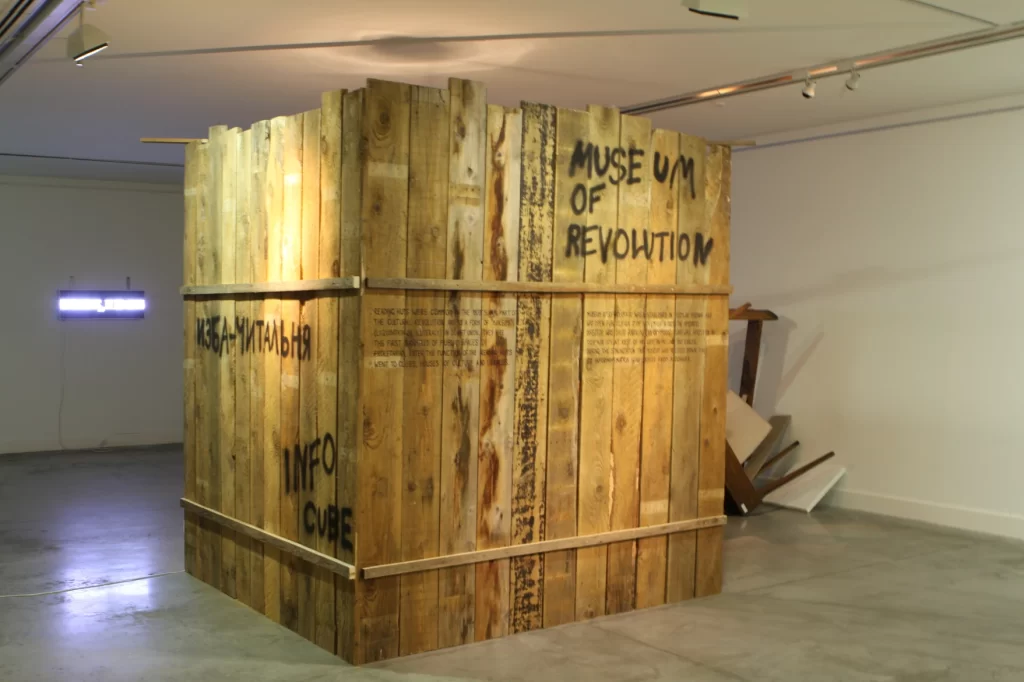
fig1

Fig 1

Azerbaijan

In addition to Azerbaijan’s established national art institutions (National Art Museum of Azerbaijan, Baku Museum of Modern Art, The Museum Center of the Ministry of Culture of the Azerbaijan Republic), investment in recent years in the capital city of Baku has led to a wave of gentrification, giving rise to a selection of dynamic contemporary art spaces that support the careers of many emergent Azeri practitioners.

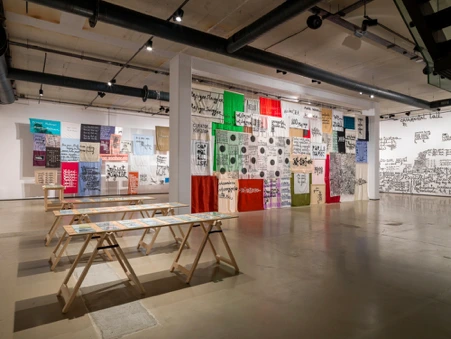
ArtFacts’ top ranked Azeri artist is Babi Badalov (b.1959,Lerik) with a world artist ranking of 3,075. He currently lives and works in Paris. Working at the intersection of visual art and poetry, Badalov is known for creating installations rooted in the concept of assemblage that combine various objects and media and regularly incorporate text, employing a breadth of symbols and languages. Because their content is political and aimed at furthering international dialogues around identity and equality, the artist was forced to leave Azerbaijan, travelling first to Saint Petersburg before settling in Paris. On returning to mount an exhibition at YARAT (Baku’s #3 Art Institute according to Artfacts) in 2019 (fig.2), Badalov commented that ‘much of the work exhibited across Azerbaijan is conservative; there are no new topics, certainly no dialogue. My mission in this exhibition at YARAT is to bring exactly what I am doing in Paris to Baku. The painted fabrics suspended from the ceiling address topics of anti-capitalism, decolonization, language identity, spirituality, mysticism, Orientalism and poetics. There is also a mural on the back wall that I made for Azerbaijan that explores the country’s complex cultural identity.’ (Mousse 67 – moussemagazine.it/babi-badalov-alice-bucknell-2019/).

Badalov exhibits regularly at international museums and is represented by the Galérie Jérome Poggi, Paris, and The Gallery Apart, Rome.
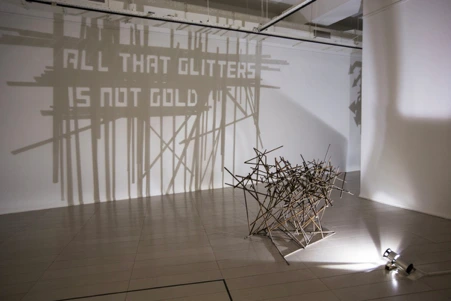
Fig 2

Georgia

According to the Artfacts.Net database, Georgia has featured in 126 exhibitions, representing 146 artists, within 25 existing institutions, in five cities. A predecessor of the present-day museum, the National Art Gallery in Tbilisi, focusses on Georgian artists. It functions under joint administration with Tbilisi History Museum, forming the Museum of Georgia. The Museum of Modern Art Tbilisi (MOMA) constitutes the next relevant institution, followed by the Center of Contemporary Art Tbilisi (CCAT).

The top Georgian artist Thea Djordjadze (b.1971 in Tbilisi) is placed at no. 758 in the world artist ranking. Currently based in Berlin, Djordjadze is mainly known for creating sculptures and installation art (fig.4). She has taken part in 152 exhibitions, of which 29 were solo shows (the last one in 2019 in Tokyo) and, six were biennials (the most recent being the last one Biennale di Venezia – 56th International Art Exhibition). She has mostly exhibited in Germany, France, and the United Kingdom. Djordjadze’s peak year, 2012, was the year in which she participated in the most public group exhibitions.

The second top ranked Georgian artist, Andro Wekua (b.1977, Sochumi), originally from Soviet Georgia, is placed no. 1059 in the global ranking. He lives in Zurich and Berlin, where he works with the media painting, drawing, film, sculpture, and installation (fig.5). His work is mostly displayed in Switzerland, the United States and Germany, featuring in a total of 145 exhibitions, of which 29 were solo shows (the most recent in 2019 at Gladstone Gallery in New York), eight biennials (the most recent in 2013 in Osaka at the Dojima River Biennale), and eight art fairs (last one in 2018 at TEFAF, Maastricht). His works can be found mainly in American museum collections, such as those of the Museum of Modern Art and the Solomon R. Guggenheim Museum in New York, and the Walker Art Center in Minneapolis.

The third Georgian artist, Vajiko Chachkhiani (b.1985), ranks no. 2198 on the global artist ranking list. He lives and works in Berlin. He is an installation artist (fig.6). He has taken part in significantly fewer exhibitions than the above mentioned artists; 33 altogether eight of which were solo shows (the most recent at Bundeskunsthalle in Bonn). He also participated in two biennials (the most recent being the 15th Istanbul Biennial in 2017) and five art fairs (the most recent being Art Basel 2019). Chachkhiani is mainly represented in Germany, Japan, and Switzerland, and his works can be found in the collection of the Museum of Contemporary Art in Siegen, Germany.

The analysis shows a pattern common to all three Georgian artists; they are based and are creatively active in Western Europe, where they are officially represented.
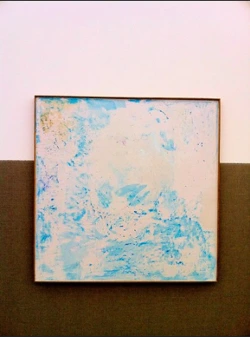
Fig 3
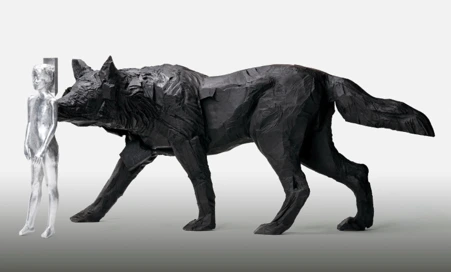
Fig 4
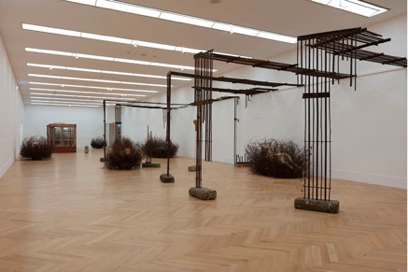
Fig 5
Leave a Reply

The presentation explores contemporary approaches to the digital documentation and accessibility of Armenian cultural heritage through the work of the Armenian Cultural Heritage Institute. It will address how heritage preservation, digital technologies, and 3D scanning initiatives can support contemporary artistic creation, research, and new forms of cultural engagement, including projects such as the Armenian Pavilion at the Venice Biennale 2025.

DDD Kunst House is an independent virtual and physical shared space that aims to provide a platform for local and international artists and curators to connect and communicate in a pure and free environment. The concept was founded in 2020 by curator Tereza Davtyan during the lockdown in Yerevan, as a response to the need for an online space where artists and curators could work together outside the limitations of traditional art institutions, foundations, museums, and galleries. :DDD Kunst House initiates from messenger chats to studio visits while sharing an open space for proper communication and collaboration. It selects the most relevant projects and may showcase them spontaneously, without focusing on a specific target audience, as it is sure that the audience will, one way or another, find their way to :DDD Kunst House. Founded in 2020 during the global COVID-19 pandemic, :DDD Kunst House is an independent, curator-led platform dedicated to fostering artistic exchange, care, and experimentation across borders. Initially operating entirely online, the initiative built a strong and diverse community through digital exhibitions, public talks, and collaborative projects. In 2022, the platform transitioned into a physical location within the former Scientific Research Institute of Spa Treatment and Physical Medicine in Yerevan, a unique and unconventional space that continues to serve as a site for exhibitions, residencies, performances, workshops, and informal public gatherings. At the core of its programming is the Sleepover Artist Residency, a distinctive, process-oriented residency model that offers artists time and space to rest, reflect, and create without the pressure of fixed outcomes. Since its launch (2024–2025), the residency has welcomed over 20 international artists from countries including Germany, France, Taiwan, Switzerland, Croatia, the United States, the Netherlands, Luxembourg, Georgia, Argentina/Chile, Italy, Ukraine, and the United Kingdom. This ongoing international engagement has significantly enriched the local cultural context and fostered meaningful, long-term connections between artists, curators, and researchers. :DDD Kunst House continues to operate as a flexible and responsive platform that supports contemporary artistic practices while maintaining a strong commitment to inclusivity, hospitality, and critical dialogue. website: www.dddkunsthouse.com IG: @ddd_kunsthouse

This presentation introduces the mission and current activities of the Ervand Kochar Museum, situating its work within the broader context of preserving and promoting modern Armenian art. It reflects on the legacy of Ervand Kochar, highlighting key aspects of his artistic contribution, while also outlining the museum’s recent achievements and its ongoing efforts to reposition Kochar within an international art historical framework.

This presentation examines the question of national identity among artists of the Tbilisi school of painting of both Georgian and Armenian origin. It focuses on professional artists Mose Toidze and Grigol Sharbabchyan, as well as self-taught painters Niko Pirosmani and Karapet Grigoryants.

A comparative analysis of their works reveals, on the one hand, shared themes and motifs, and on the other, differences in aesthetic and artistic perception. These differences, among artists living within the same geographical and social environment, demonstrate the resilience of long-standing national traditions in both cultures.

Abstract: Charles Sirató’s Dimensionist Manifesto (1936) created a network linking the international avant-garde, including Ervand Kotchar and António Pedro. Grounded in the theory of relativity and an interpretation of the fourth dimension, it extended this idea across literature, painting, sculpture, and their transgressions. These arts were expanded upon by adding a new dimension to the traditional ones. While Kotchar’s “painting in space” and Pedro’s dimensional poems viewed dimensional increase based on concepts of simultaneity and duration, Sirató emphasized a scientifically informed, material objectification as the basis for new perception. Together, these perspectives define a key transformation of the art object in the avant-garde in the 1930s.


Leon (Serge) Tutundjian: A Moment in Time: The Paris avant garde in transition amid a multiplicity of theories and practices.

Between 1925 and 1930, Paris functioned as a cauldron of ideas and experimental practices across film, poetry, sculpture, painting, and philosophy. At the centre of these developments were urgent questions of space and metaphysics-above all, the relationship between objects and the role of the viewer in the realisation of a work of art.

Within this field, Leon (Serge) Tutundjian emerges as a key figure. His work destabilises form, collapsing the boundary between object and perception and requiring the viewer’s active participation. In doing so, he anticipates the logic of Tachism-not as a style, but as a mode of thought in which the artwork is realised through perception.

Alongside Kochar and Kakabadze, Tutundjian exhibited with the Parisian avant- garde, contributing to a shift from form to experience. The Wall Street Crash of 1929 curtailed this moment of experimentation, forcing artists and markets into retreat. Tutundjian left Parris soon after, his trajectory abruptly interrupted.

This brief period-following the cultural intensity of Weimar Berlin-proved decisive in shaping modernism. Though now largely forgotten, Tutundjian was not peripheral, but integral to this redefinition of the artwork as a site of unstable meaning and viewer realisation.

This presentation explores how the unique institutional model of the ZKM | Center for Art and Media, Karlsruhe supports media art across its entire lifecycle: From ideation and production through exhibition to preservation and restoration. Central to this approach is empowering artists through the support infrastructure and expertise of its people, integrating cutting-edge tools into an ecosystem that bridges artistic production, maintenance, and long-term conservation of
media art works.

What happens when a museum cannot honestly say what a work is, who made it, or whether what you are seeing matches what was first shown? This talk argues that digital instability is not a technical problem awaiting a solution — it is the underlying condition of cultural work today. Moving through three interlocking registers — technical, cognitive, and authorial — it proposes framing as care as a curatorial practice adequate to the present: one that renders uncertainty legible rather than resolving it, and that holds institutions accountable for the systems they host, commission, and call art.

This presentation explores how and why the ArtNexus project integrates international expertise with local governance to foster a resilient and democratic cultural sector in Armenia. By examining our multi-stakeholder approach to policy development and institutional support, we highlight how collaborative program models can bridge the gap between global standards and local artistic needs while maintaining respect for cultural differences.

This theme looks at cross-border initiatives, artist collectives, and collaborative projects that connect Georgian and Armenian artists and cultural practitioners. In reaction to common histories of empire, conflict, migration, and underfunded cultural infrastructures, it emphasises the practical, ethical, and political aspects of cooperation. It explores how such partnerships negotiate national narratives and conflict legacies while addressing networked practices, such as co-productions, artist-run spaces, residencies, exhibitions and digital platforms.