Has Anything Changed?

The art industry in independent Armenia never developed sufficiently to materially change the way the art industry had functioned in Soviet Armenia. Art collectors had gone underground and they mostly remained underground. How has the art industry regenerated after decades of nationalisation of both art works and galleries; and how had it evolved in the Soviet Union and in Soviet Armenia? Armenia Art Fair met to discuss this with Nazareth Karoyan, art critic, curator and Director of the Institute of Contemporary Art of Armenia.

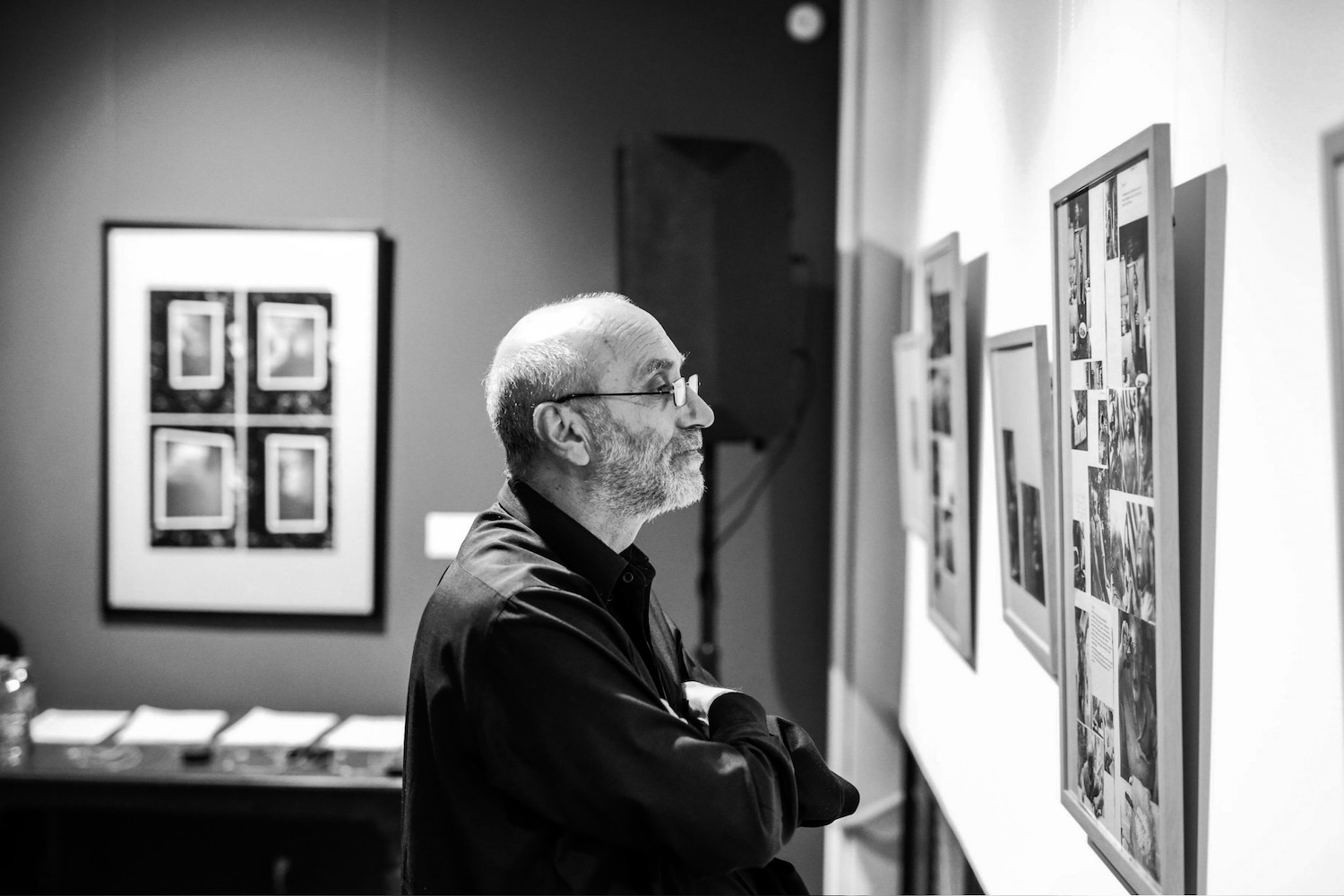
Since the 1980s, Karoyan has contributed enormously to the establishment of the contemporary art landscape in Armenia. He has set up several private art galleries, the first Armenian contemporary art periodical, and curated up to twenty exhibitions. “I don’t know many art collectors of the past. Until now, it has not even been defined who is an art collector – is it someone who has five works or one hundred?”

However, 40 years of engagement with art speaks for itself. “Art collection didn’t exist in the Soviet Union as such. Up until the 1960s there were periods of fundamental change in the socio political, societal and cultural lives of the people. Then citizens started to question both the system and themselves, through art. This led to the revival of art – out of antagonism towards Socialist Realism came new aesthetics in terms of art genres, and this increased the collection of art”.

However, it was still illegal which is why underground communities of art collectors formed in the
Soviet Union.

“Young artists opposed well-established painters, and those professional creators of colossal works of Socialist Realism featuring the Soviet citizen and the toil involved in building Socialism. Young artists started painting simple landscapes, human, emotional simple works. Due to the emotional and psychological issues originating from the complication of Soviet society, the Soviet citizen started questioning its future as a utopia”.

At the same time, underground and illegal entrepreneurial practices were establishing in the Soviet Union and the two realities coincided naturally. “Art and art collecting in itself became a tool of influence in certain circles. At that time, it involved the so-called underground businessmen and the Soviet ruling elite: to indicate a certain status, they would invest in art and they couldn’t hide the funds needed to do so. Art collectors also loved the works, they loved interactions with artists and creating links and friendships with painters. Understanding art comes later, first comes the love of art, and a professional understanding of art evolves through long-term involvement”.

The 70s and 80s provided enough time for art collectors to also develop and dictate taste in contemporary art, shaping the black market of art of the Soviet Union. “It became mutually complementary: new approaches brought interest in the paintings, the purchases and the tastes and requirements of the art collectors set a bar of quality and through the time the art market, the art industry evolved and developed”.

An interesting development of the 70s and 80s was the involvement of the art-representatives outside of the Soviet Union. They were interested not just in Soviet art but in art that was antagonistic to the Soviet Union and its ideology. “I know about cases, when well established, as well as unknown Armenian artists’ works, were purchased and transferred from the Soviet Union. Nevertheless, the collapse of the Soviet Union didn’t accumulate progress that would have brought Armenian art collectors out of the shadow. It wasn’t somehow imposed by the state regulations rather than the realities of wealth distribution. The contemporary art didn’t acquire the cultural, societal, economic importance to pave its path from the underground. Another circumstance was the fact that people who happened to own the money turned out to be oligarchs who were not interested in publicity at all”.  

The underground art collection was an obstacle for the progress and expansion of contemporary art and development of the dynamic art market and industry in Armenia. “It is a pity since the market and industry development only shapes art collections and brings new values to the societies. We lack mechanisms and good practice. While there is always a chance for private collections ending up as public wealth presented by the families, the absence of mechanisms never creates a chance for it.”
“These issues are discussed in narrow professional circles, but it does not become a subject for wide public discussion, it does not become a subject of academic research, which leads to the fact that on the one hand, the market, on the other hand, the preservation, dissemination and popularisation does not develop”.
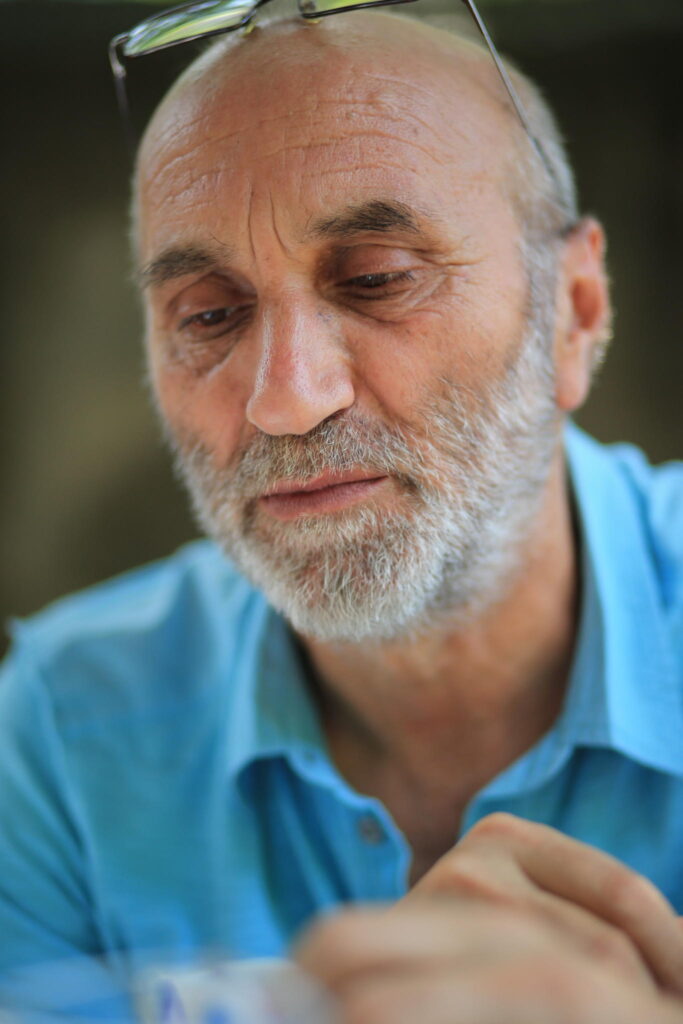
Photo credit: Ed Tadevosyan
Leave a Reply

The presentation explores contemporary approaches to the digital documentation and accessibility of Armenian cultural heritage through the work of the Armenian Cultural Heritage Institute. It will address how heritage preservation, digital technologies, and 3D scanning initiatives can support contemporary artistic creation, research, and new forms of cultural engagement, including projects such as the Armenian Pavilion at the Venice Biennale 2025.

DDD Kunst House is an independent virtual and physical shared space that aims to provide a platform for local and international artists and curators to connect and communicate in a pure and free environment. The concept was founded in 2020 by curator Tereza Davtyan during the lockdown in Yerevan, as a response to the need for an online space where artists and curators could work together outside the limitations of traditional art institutions, foundations, museums, and galleries. :DDD Kunst House initiates from messenger chats to studio visits while sharing an open space for proper communication and collaboration. It selects the most relevant projects and may showcase them spontaneously, without focusing on a specific target audience, as it is sure that the audience will, one way or another, find their way to :DDD Kunst House. Founded in 2020 during the global COVID-19 pandemic, :DDD Kunst House is an independent, curator-led platform dedicated to fostering artistic exchange, care, and experimentation across borders. Initially operating entirely online, the initiative built a strong and diverse community through digital exhibitions, public talks, and collaborative projects. In 2022, the platform transitioned into a physical location within the former Scientific Research Institute of Spa Treatment and Physical Medicine in Yerevan, a unique and unconventional space that continues to serve as a site for exhibitions, residencies, performances, workshops, and informal public gatherings. At the core of its programming is the Sleepover Artist Residency, a distinctive, process-oriented residency model that offers artists time and space to rest, reflect, and create without the pressure of fixed outcomes. Since its launch (2024–2025), the residency has welcomed over 20 international artists from countries including Germany, France, Taiwan, Switzerland, Croatia, the United States, the Netherlands, Luxembourg, Georgia, Argentina/Chile, Italy, Ukraine, and the United Kingdom. This ongoing international engagement has significantly enriched the local cultural context and fostered meaningful, long-term connections between artists, curators, and researchers. :DDD Kunst House continues to operate as a flexible and responsive platform that supports contemporary artistic practices while maintaining a strong commitment to inclusivity, hospitality, and critical dialogue. website: www.dddkunsthouse.com IG: @ddd_kunsthouse

This presentation introduces the mission and current activities of the Ervand Kochar Museum, situating its work within the broader context of preserving and promoting modern Armenian art. It reflects on the legacy of Ervand Kochar, highlighting key aspects of his artistic contribution, while also outlining the museum’s recent achievements and its ongoing efforts to reposition Kochar within an international art historical framework.

This presentation examines the question of national identity among artists of the Tbilisi school of painting of both Georgian and Armenian origin. It focuses on professional artists Mose Toidze and Grigol Sharbabchyan, as well as self-taught painters Niko Pirosmani and Karapet Grigoryants.

A comparative analysis of their works reveals, on the one hand, shared themes and motifs, and on the other, differences in aesthetic and artistic perception. These differences, among artists living within the same geographical and social environment, demonstrate the resilience of long-standing national traditions in both cultures.

Abstract: Charles Sirató’s Dimensionist Manifesto (1936) created a network linking the international avant-garde, including Ervand Kotchar and António Pedro. Grounded in the theory of relativity and an interpretation of the fourth dimension, it extended this idea across literature, painting, sculpture, and their transgressions. These arts were expanded upon by adding a new dimension to the traditional ones. While Kotchar’s “painting in space” and Pedro’s dimensional poems viewed dimensional increase based on concepts of simultaneity and duration, Sirató emphasized a scientifically informed, material objectification as the basis for new perception. Together, these perspectives define a key transformation of the art object in the avant-garde in the 1930s.


Leon (Serge) Tutundjian: A Moment in Time: The Paris avant garde in transition amid a multiplicity of theories and practices.

Between 1925 and 1930, Paris functioned as a cauldron of ideas and experimental practices across film, poetry, sculpture, painting, and philosophy. At the centre of these developments were urgent questions of space and metaphysics-above all, the relationship between objects and the role of the viewer in the realisation of a work of art.

Within this field, Leon (Serge) Tutundjian emerges as a key figure. His work destabilises form, collapsing the boundary between object and perception and requiring the viewer’s active participation. In doing so, he anticipates the logic of Tachism-not as a style, but as a mode of thought in which the artwork is realised through perception.

Alongside Kochar and Kakabadze, Tutundjian exhibited with the Parisian avant- garde, contributing to a shift from form to experience. The Wall Street Crash of 1929 curtailed this moment of experimentation, forcing artists and markets into retreat. Tutundjian left Parris soon after, his trajectory abruptly interrupted.

This brief period-following the cultural intensity of Weimar Berlin-proved decisive in shaping modernism. Though now largely forgotten, Tutundjian was not peripheral, but integral to this redefinition of the artwork as a site of unstable meaning and viewer realisation.

This presentation explores how the unique institutional model of the ZKM | Center for Art and Media, Karlsruhe supports media art across its entire lifecycle: From ideation and production through exhibition to preservation and restoration. Central to this approach is empowering artists through the support infrastructure and expertise of its people, integrating cutting-edge tools into an ecosystem that bridges artistic production, maintenance, and long-term conservation of
media art works.

What happens when a museum cannot honestly say what a work is, who made it, or whether what you are seeing matches what was first shown? This talk argues that digital instability is not a technical problem awaiting a solution — it is the underlying condition of cultural work today. Moving through three interlocking registers — technical, cognitive, and authorial — it proposes framing as care as a curatorial practice adequate to the present: one that renders uncertainty legible rather than resolving it, and that holds institutions accountable for the systems they host, commission, and call art.

This presentation explores how and why the ArtNexus project integrates international expertise with local governance to foster a resilient and democratic cultural sector in Armenia. By examining our multi-stakeholder approach to policy development and institutional support, we highlight how collaborative program models can bridge the gap between global standards and local artistic needs while maintaining respect for cultural differences.

This theme looks at cross-border initiatives, artist collectives, and collaborative projects that connect Georgian and Armenian artists and cultural practitioners. In reaction to common histories of empire, conflict, migration, and underfunded cultural infrastructures, it emphasises the practical, ethical, and political aspects of cooperation. It explores how such partnerships negotiate national narratives and conflict legacies while addressing networked practices, such as co-productions, artist-run spaces, residencies, exhibitions and digital platforms.